
The River
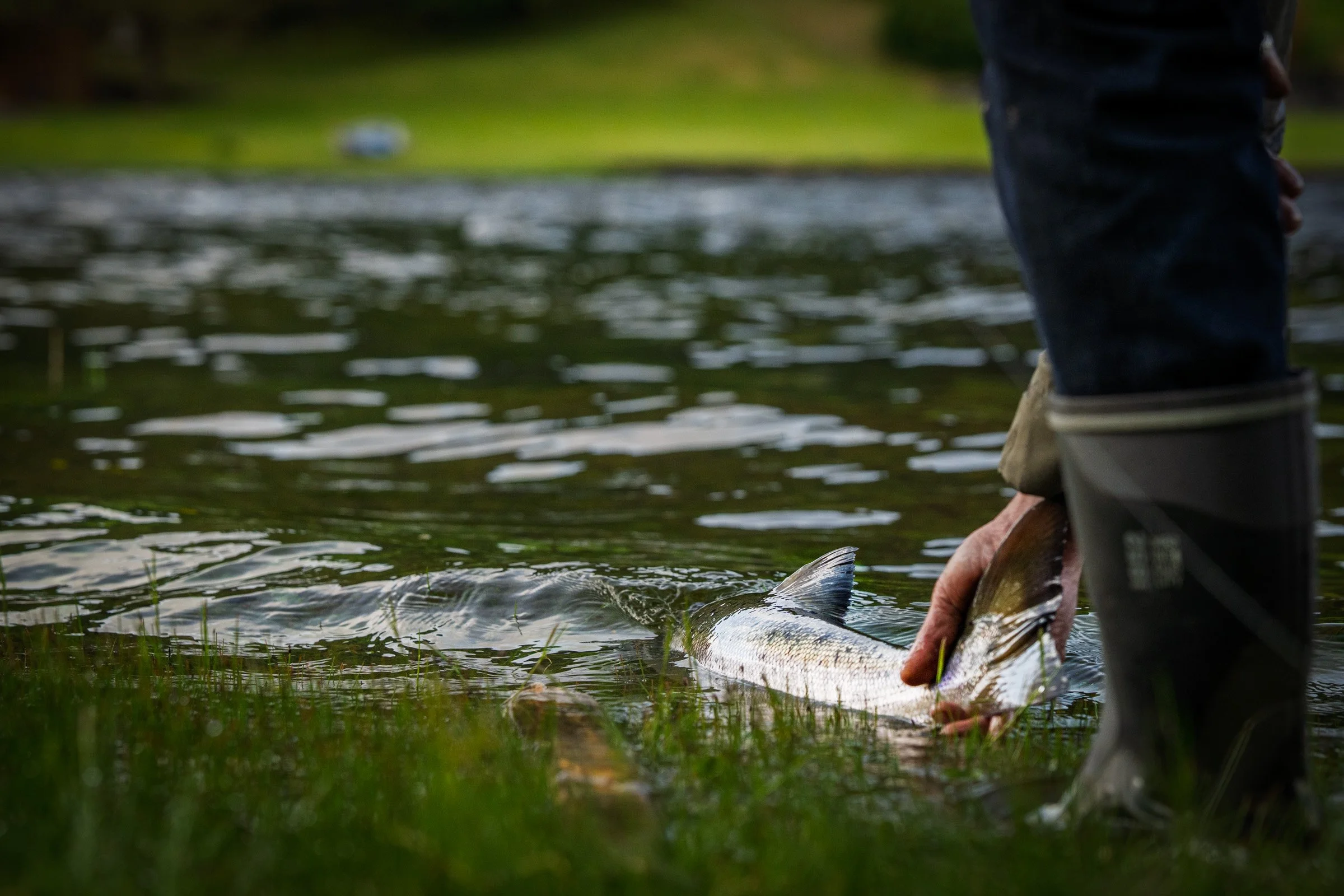
“Probably the finest salmon fishing in the world” is a bold statement, and it needs to be justified. This article explains why the fishing at Osen merits that accolade.
We let the river and house to one person each week, allowing no one other than you and your guests to fish the river. Often, there are only one or two fishermen on the river. In comparison to most other rivers, Osen is underfished — this ensures excellent salmon fishing for those fortunate enough to visit.
We publish our statistics; not many rivers do this, but when comparing with similar rivers, we estimate that our catches are two to three times higher per fisherman.
Osen holds the rights to most of the first 5 kilometers of the river. There are no complicated sublets, which are commonly found on other rivers and can inhibit or adversely affect the quality of fishing.
Salmon are perceptive and quickly tire of seeing lures. Osen’s fishing rights begin at the mouth of the estuary, so your fly will likely be the first that the salmon encounters.
Our fishing statistics, which extend back to 1884, reveal that the river remains as vibrant and healthy today as it was a century ago. We have been fortunate to avoid the perils of overfishing, viruses, hydroelectric schemes, pollution, netting, and salmon fish farms. The government has recognised the fjord and river as worthy of protection, designating them as a salmon river.
In recent years, there has been a notable decline in residential development and construction around Osen. A century ago, Osen was a flourishing community, boasting a plethora of houses, three public houses, several mills, and a shop. Today, only the shop endures, now transformed into a private residence, with the community reduced to a mere handful of houses. This decline in human habitation has significantly mitigated pollution and other intrusive activities, thereby allowing the salmon to thrive in an undisturbed environment.
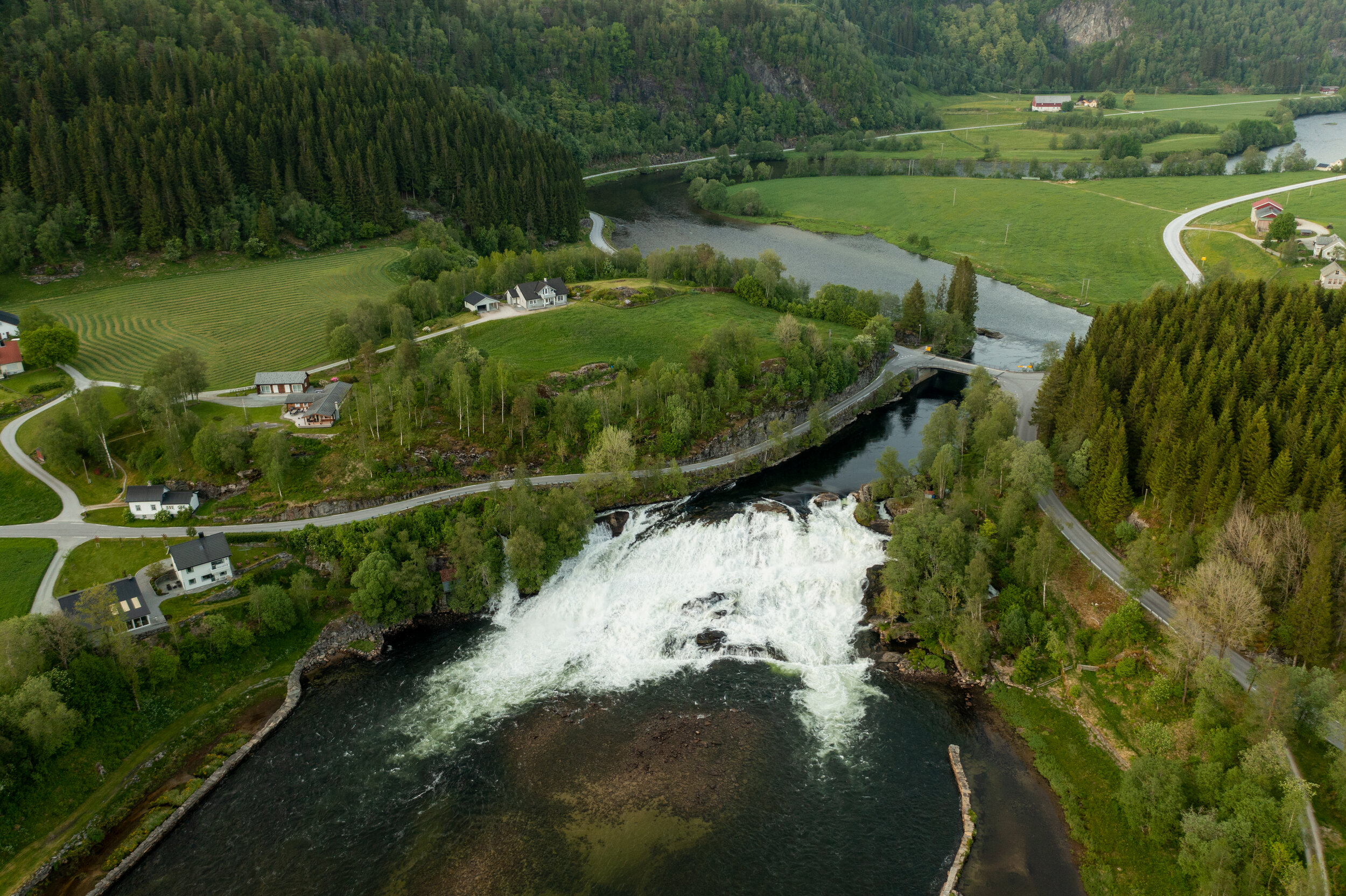
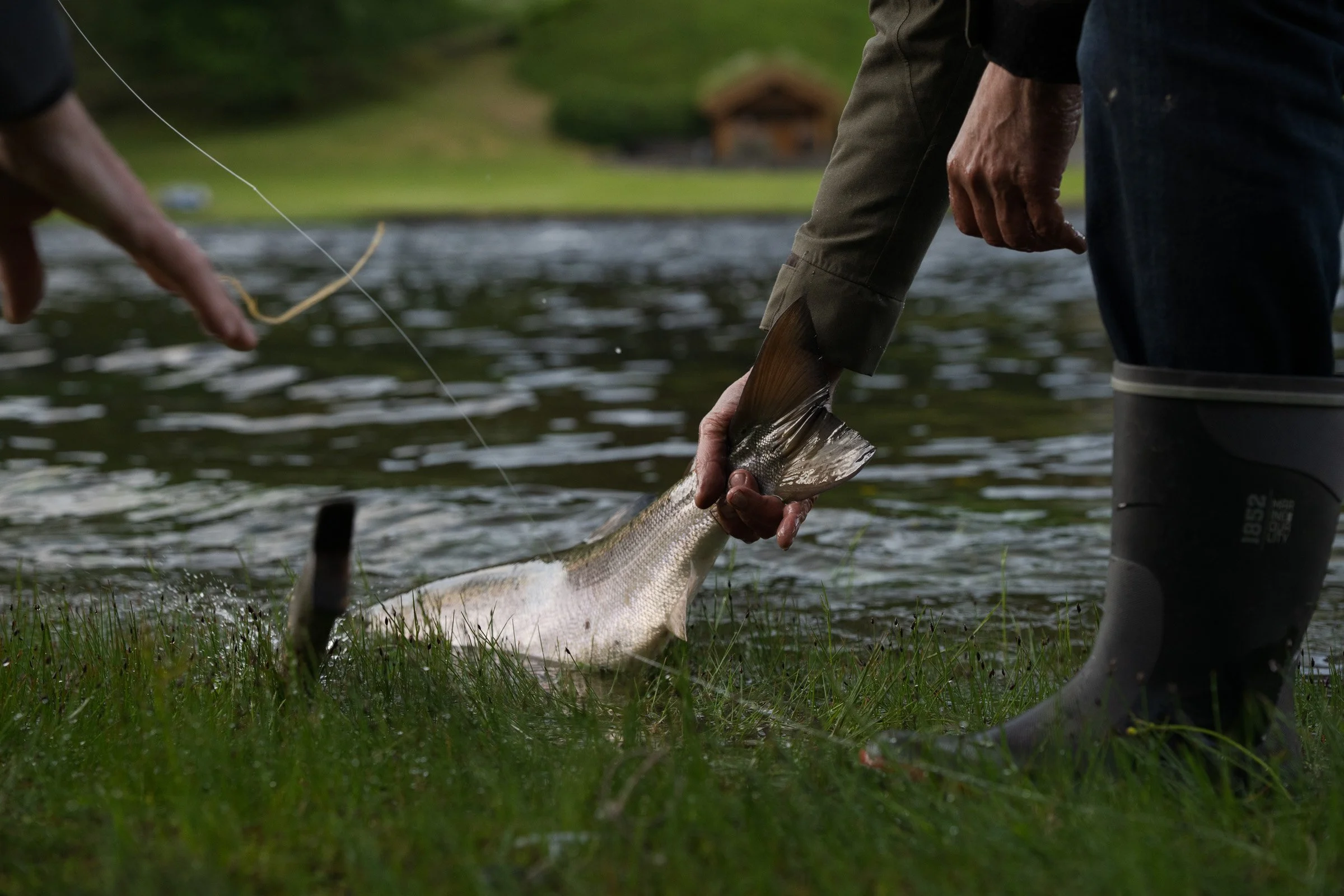
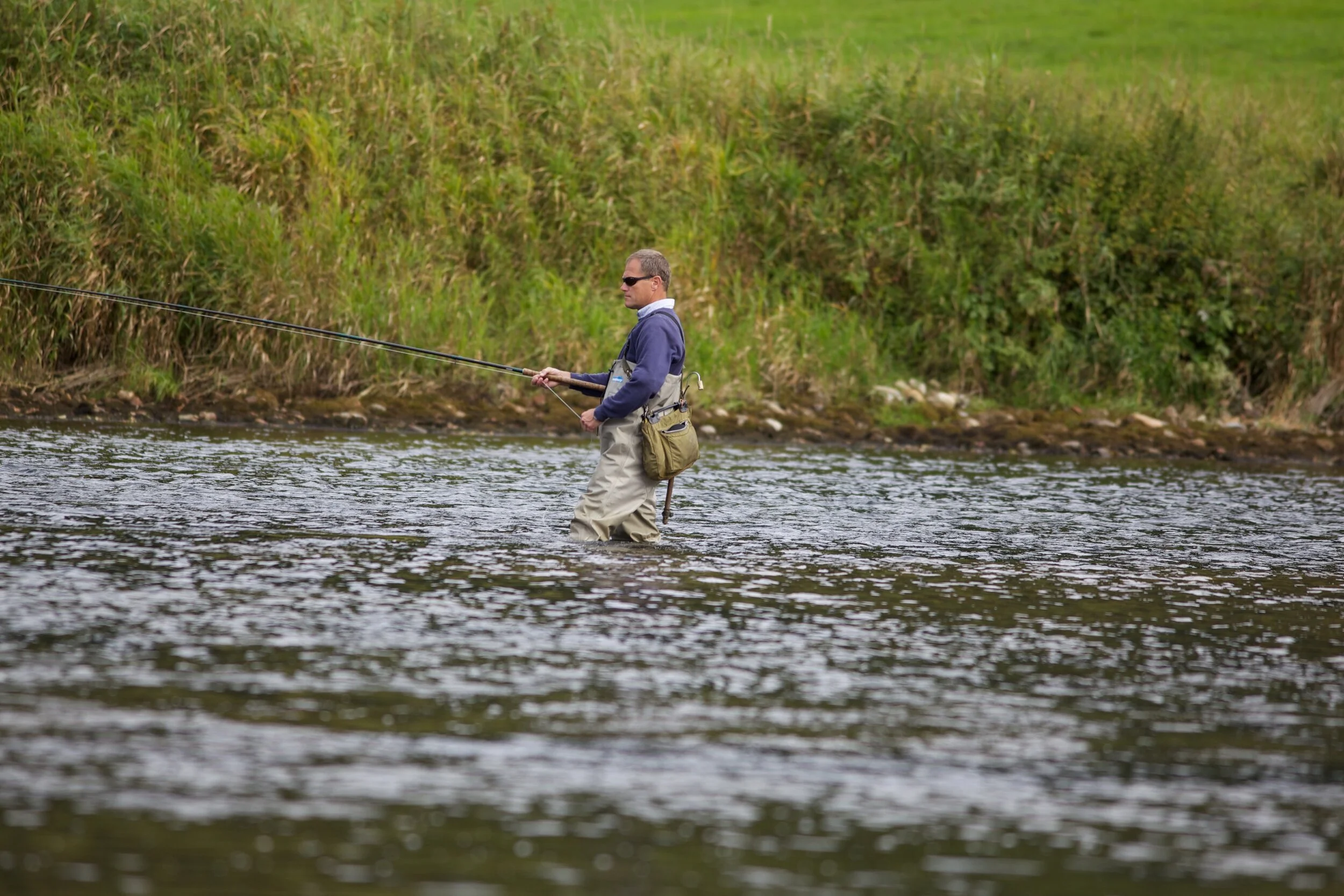
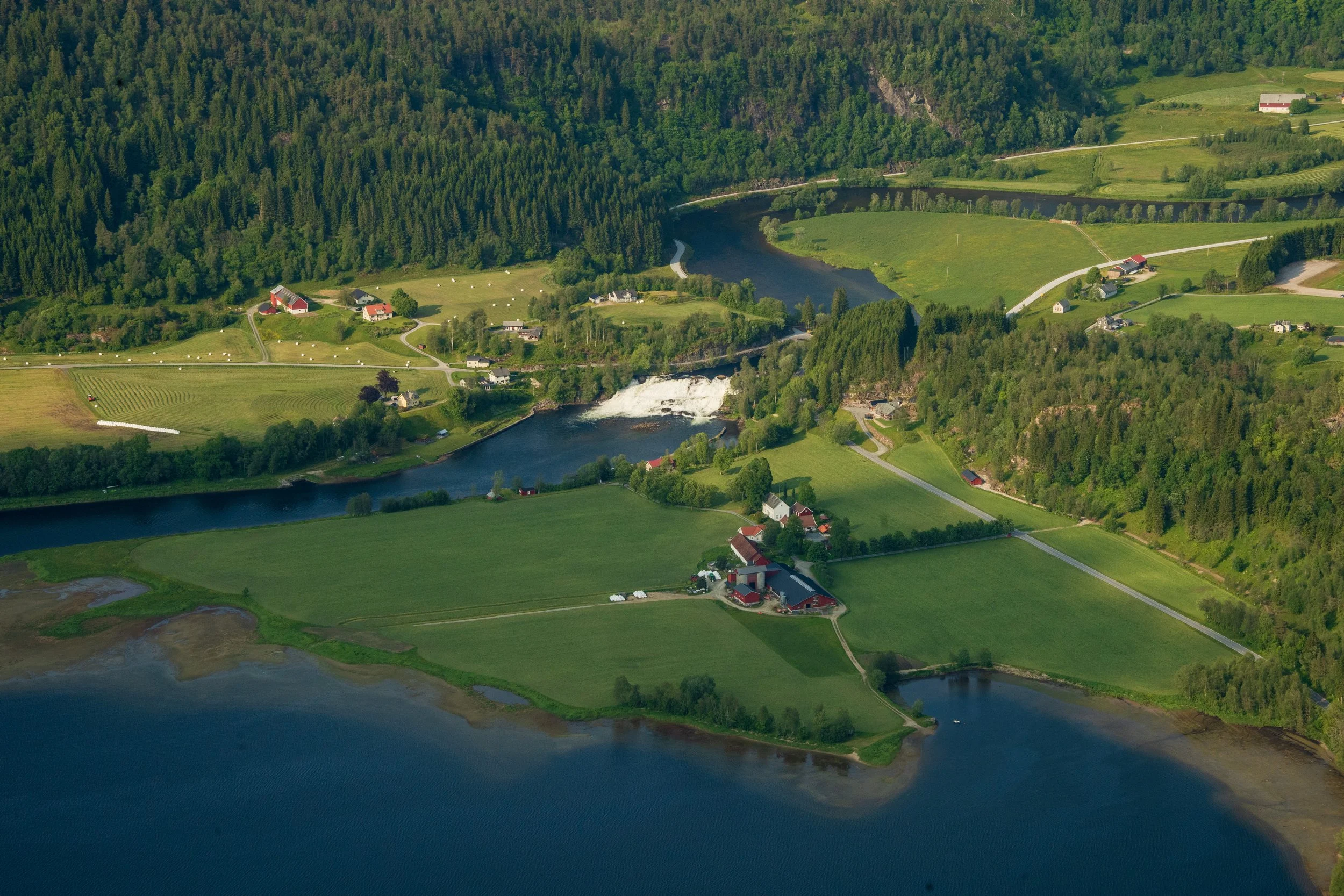
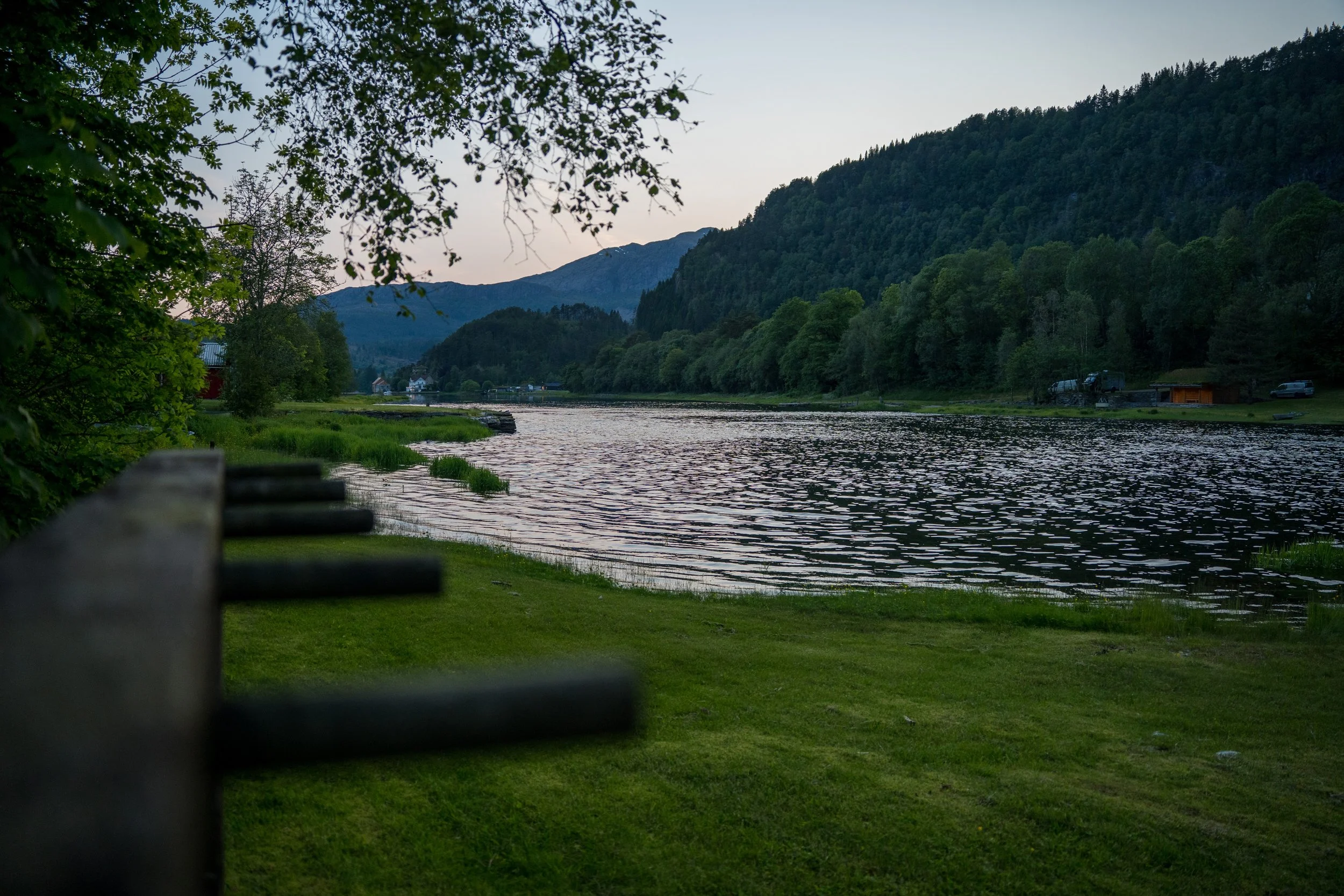

The River Gaula boasts an exceptionally robust head of water. Firstly, it flows through two lakes, which together extend for 24 kilometres, providing a substantial reservoir of water. During dry spells, these lakes ensure that the river consistently maintains an ample supply of water.
Secondly, the river originates from the Jostedalsbreen Glacier, where the ice reaches depths of up to 600 metres, offering an almost limitless source of water. During warmer periods, the glacial meltwater increases, ensuring that even in prolonged dry spells, the river remains abundant. In fact, the water levels can rise, allowing for excellent fishing opportunities long after other rivers have become unproductive.
In most rivers, once migrating salmon have ascended upstream, that is typically the last opportunity for anglers to catch them. However, in the River Gaula, salmon can only navigate 14 kilometres before encountering an impassable waterfall.
Upon reaching this barrier, the salmon will then head downstream in search of a suitable spawning location, providing anglers with a second chance to catch the same fish. Furthermore, nearly all of our waters are prime spawning territory, offering yet another opportunity for anglers to catch salmon once they have settled into their breeding grounds.

The river has an exceptional volume of water able to sustain large salmon in great numbers. This is due to the river starting its journey in one of the wettest places on earth which is also Europe’s largest glacier, the Jostedalsbreen.
The waters of the River Gaula are ideal for salmon. Most glacier-fed waters do not sustain salmon, as their blue-hued water carries sediment that irritates a salmon’s gills and is generally unappealing to the fish. In contrast, the River Gaula descends through two long lakes, each measuring between 10 to 14 kilometres. Here, the glacial sediment settles out, resulting in gin-clear water that is perfect for salmon as it flows past the lower reaches at Osen.
After heavy rain, the River Gaula clears quickly, whereas many other rivers take significantly longer to regain clarity. The lakes that filter out the glacial sediment also perform the same function for cloudy rainwater. Consequently, discoloured water only needs to travel 14 kilometres from the lakes to the river mouth before the river is clear, restoring good fishing conditions. This process, which may take close to a week on some rivers, is completed in just a day or two on the River Gaula.
The Osfossen Ladder features a fish counter and camera, allowing us to monitor precisely how many fish have entered the river. This information helps us determine when it is worthwhile to fish upstream. With an accurate record of fish entering the river, we can also ensure that the river maintains a sufficient stock of fish for future sustainability.
The Osen stretch of the river twists and turns through over 180 degrees. Some pools are best fished as the morning sun reaches them, while others yield better results in the afternoon or evening when the sun dips behind the hills. Thus, at any time of day, one can select the pool that is likely to be most productive, significantly increasing the chances of catching a salmon.

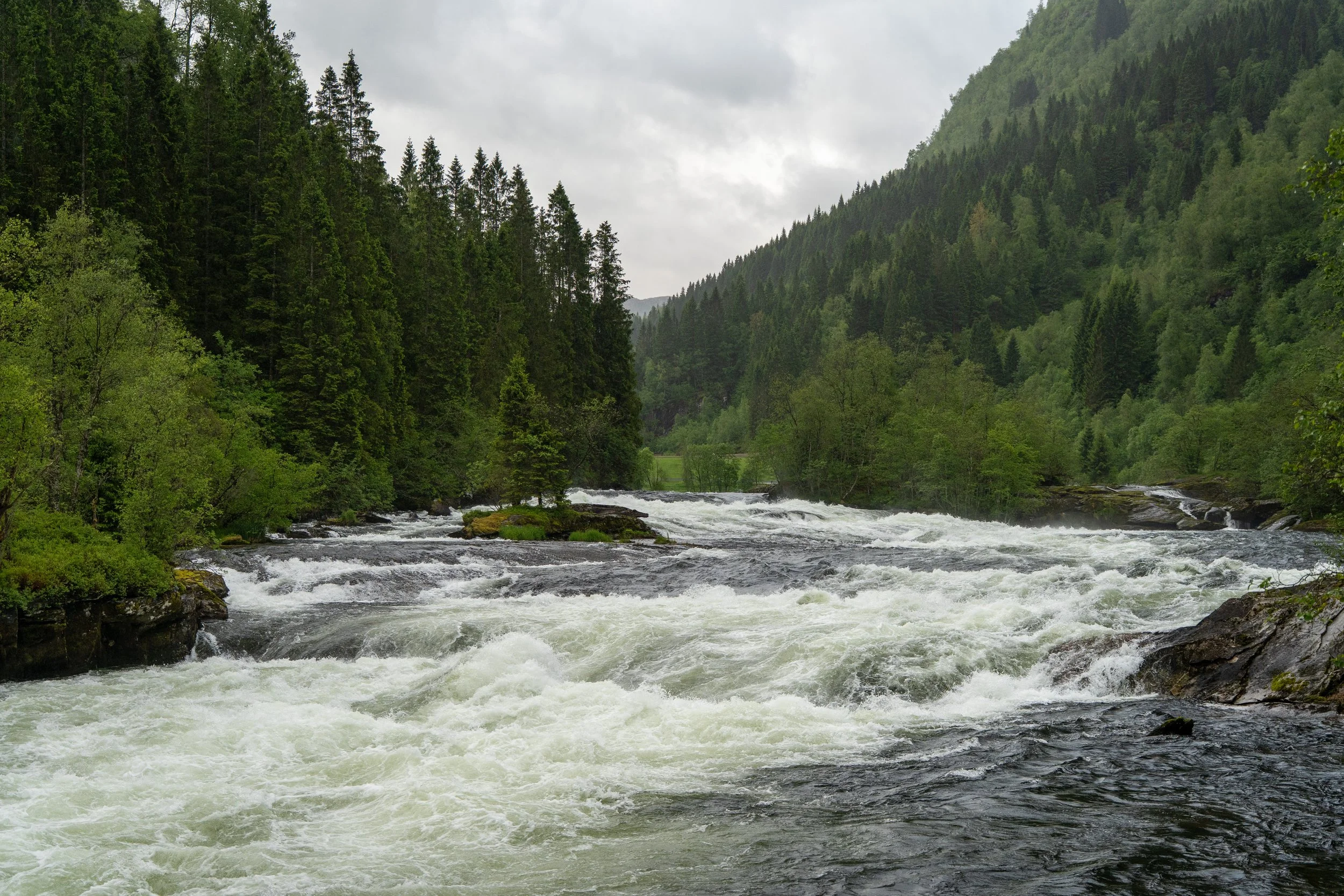
Gaula salmon are known to give a great fight for their size. Firstly, Gaula salmon are sleek and torpedo-shaped, with relatively large tails that provide the power needed to climb the 60-foot ladder at the mouth of the river and subsequently navigate the numerous rapids and waterfalls, some of which look impassable. Weaker salmon unable to navigate these rapids have been weeded out over generations.
Secondly, the rapids and white water under the two waterfalls ensure that the river is well oxygenated, so when salmon are caught, they are like oxygen-fuelled rockets. Thirdly, along most of its length, the river is fast-flowing, which means that when you catch a salmon, you are in for a battle. It is often a relief not to catch too large a fish, as the flow of the river and the strength of a fish can easily overpower an unwary fisherman.
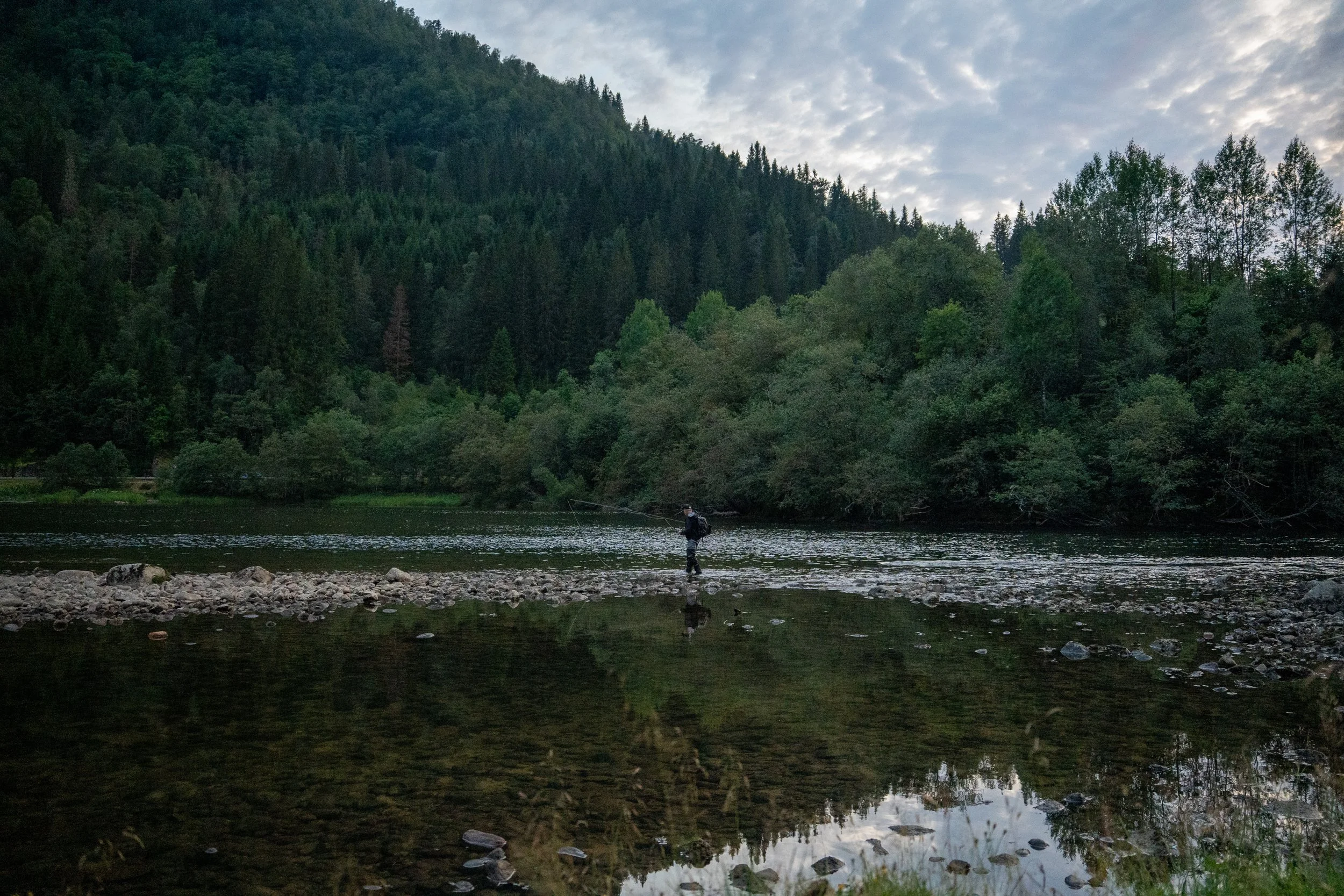
Fourthly, Osen’s stretch of water starts at the mouth of the river, so the salmon are fresh-run from the ocean, not exhausted from having travelled miles upstream. There are 14 named pools on the river, each with its own unique qualities, offering a variety to suit both novice and advanced fishermen. Angling ranges from stone wall fishing to challenging boulder-strewn rapids. The river will suit the novice yet stretch the capabilities of the most experienced.
Wading is possible in most parts of the river, where the bed is a mixture of gravel and small stones. Six pools have rowing boats, which are useful in higher water or when battling a large fish. The river is narrow enough for a good caster to reach halfway across in most places but wide enough that you are not interfered with by anyone fishing on the other bank.
Comparatively consistent fishing can be had throughout the season, due to the waterfalls and the ladder. Until early July, the best fishing is below Osfossen, where fish will gather until the water reaches 12 degrees Celsius. Once salmon start migrating upstream, they gather below the second waterfall, Rekevik Foss, where they cannot ascend until water levels fall. While migrating salmon can be caught at all times, these two waterfalls significantly improve the chances of catching salmon. Both waterfalls have ladders to allow salmon to pass.
While many rivers suffer from feast and famine, where salmon tend to migrate in shoals, the ladders tend to stop salmon from gathering in groups. Thus, fishermen have a more even chance of catching salmon throughout their stay.
There are two River Gaulas in Norway; we are the southerly one, about 100 kilometres north of Bergen. You may well ask, if the fishing is that good, why haven’t you heard of us? Until ten years ago, the river was let for several decades to one of Norway’s largest companies for their private use. The river is therefore not well known, even amongst Norwegians.
Another significant factor in maintaining healthy fishing is that the river is managed by a small number of owners. The sustainability of the fishery is therefore relatively easy to control in the interests of both salmon and fishermen. Unlike many rivers, we are fortunate not to suffer from midges and mosquitoes.